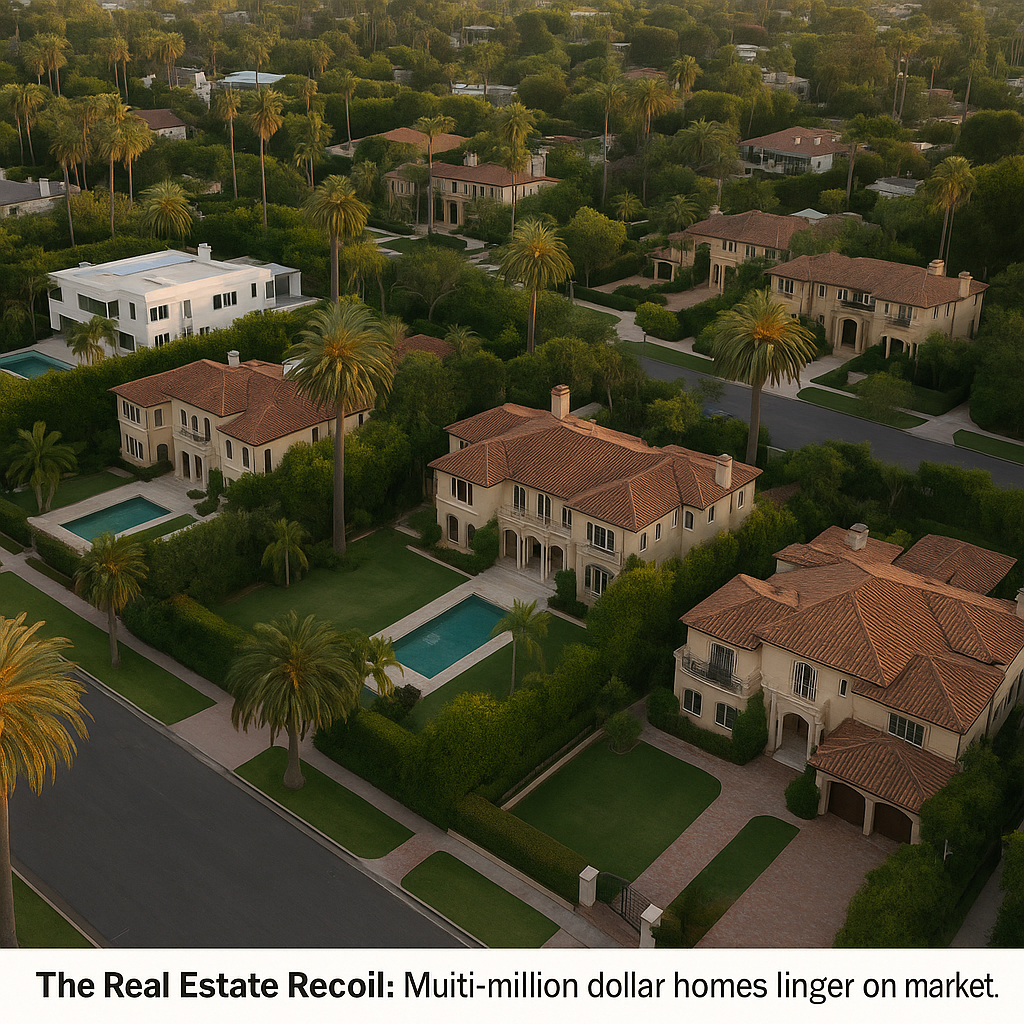
The 2025 economic narrative in the United States is taking an unexpected twist. Traditionally, recessions have started by impacting the working class first—factory layoffs, service industry slowdowns, and wage stagnation. But this time, the slowdown seems to be hitting America’s affluent population first. It’s being called the “richcession,” and its consequences could be more far-reaching than expected.
What Is a Richcession?
A richcession is a form of economic downturn that begins at the top. Instead of blue-collar industries bearing the initial brunt, this recession disproportionately affects high-income earners, investors, and professionals in white-collar sectors. The symptoms include plummeting luxury goods sales, shrinking investment portfolios, and widespread layoffs in high-skill jobs like tech, finance, and law.
Coined by economists observing trends post-2022, the term gained prominence in 2023 and is now front and center in 2025. Unlike past downturns triggered by manufacturing or housing collapses, the richcession is led by volatility in capital markets, tax pressures, and the disruptive force of artificial intelligence.
Why the Wealthy Are Pulling Back in 2025
Stock Market Volatility
Following a steep climb in tech stocks post-pandemic, the S&P 500 and NASDAQ saw erratic behavior in late 2024. Many affluent Americans, heavily invested in equities and private tech ventures, faced significant losses. As capital gains diminished, spending naturally slowed.
AI-Driven White-Collar Job Cuts
AI technology has reached a critical point in 2025. Companies are replacing high-paying professionals with more efficient AI systems. Legal researchers, financial analysts, and even software engineers have seen jobs eliminated or consolidated. This wave of automation is sparking anxiety in boardrooms and shrinking income streams for professionals who once thought themselves insulated from job disruption.
Taxation Pressures and Wealth Migration
States like California and New York have introduced or expanded luxury taxes, wealth taxes, and real estate levies. High-net-worth individuals are reacting by moving to tax-friendly states like Florida and Texas, but the friction of this transition is visible in asset liquidations, declining local economies, and a halt to new luxury developments.
Venture Capital Freeze
What was once a hyper-competitive environment for seed funding has chilled. Venture capital firms, responding to market instability, are holding back. Affluent investors, seeing returns slow and risk increase, are stepping back from speculative investments. Startups, once flush with elite cash, are struggling to stay afloat.
From Luxury to Frugality: A Shift in Consumer Behavior
Luxury brands are among the earliest casualties. Reports from Bain & Company reveal a 19% year-over-year drop in U.S. luxury spending. Retailers like Louis Vuitton and Gucci have missed earnings targets. Tesla’s high-end models are sitting unsold, and private jet bookings are down nearly 30%.

Yet it’s not just the ultra-wealthy. Upper-middle-class professionals are also cutting back. Suburban families are canceling vacations, skipping home renovations, and selling second properties. Even country clubs and yacht dealers report declining interest.
Discount retailers and resale platforms are simultaneously seeing an influx of upper-income customers. Places like Costco, The RealReal, and even thrift marketplaces are reporting changes in customer demographics. The rich are not broke, but they are behaving like they might be soon.
Investment Strategy: Flight to Safety
In times of economic stress, money seeks safety. In 2025, that means:
- Short-term U.S. Treasury bonds
- Gold and precious metals
- FDIC-insured high-yield savings accounts
- Real assets like farmland and infrastructure funds
Financial advisors note a shift in tone. Clients with $1 million+ portfolios are pulling out of emerging markets and cutting exposure to real estate investment trusts (REITs) and cryptocurrencies. Liquidity is king, and the appetite for risk is gone.
This strategic pivot drains capital from growth sectors. Tech innovation slows, IPOs stall, and angel investments dry up. With the rich taking their money off the table, America’s startup ecosystem is facing a serious contraction.
The Housing Market’s Upscale Retreat
High-end housing markets are showing signs of stress. In cities like Miami, Los Angeles, and Austin, listings above $5 million are lingering. Price reductions are becoming more common, and some properties have been pulled off the market entirely.
Buyers are more cautious, and sellers are increasingly motivated. In New York, luxury condo inventory has doubled since 2023. International buyers are stepping back as well, waiting to see if prices fall further.
Interestingly, there’s a spike in demand for:
- Luxury rentals (shorter commitment)
- Smaller secondary homes in tax havens
- International properties for asset diversification
Even the ultra-wealthy are leaning toward flexibility and liquidity.

The Numbers Don’t Lie
Here’s how the numbers stack up:
- Luxury Spending: ↓ 19% year-over-year (Bain & Company)
- Private Jet Usage: ↓ 28% (NetJets & VistaJet internal estimates)
- Capital Gains Tax Revenue (IRS advance filings): ↓ 22%
- Venture Funding: ↓ 31% for early-stage U.S. startups (Crunchbase Q1 2025)

More quietly, layoffs in white-collar sectors are accelerating. Goldman Sachs, Meta, LinkedIn, and others have executed cuts at middle and upper management levels. Unlike in 2020, the restaurant and construction industries remain stable—at least for now.
Corporate Response: Trimming the Fat at the Top
Executives and knowledge workers are being quietly shown the door. Terms like “efficiency alignment” and “AI integration” now mask what is essentially white-collar downsizing. Google froze promotions. Facebook eliminated entire product teams. Law firms have started deferring partnership tracks.
This white-collar compression has sent a message: no one is untouchable anymore. Even six-figure earners are on edge, especially those in finance, law, and tech.

Ripple Effects: When the Rich Pull Back
The wealthy don’t just consume—they support entire ecosystems:
- Private pilots, nannies, stylists, and tutors lose income
- High-end realtors and architects have fewer commissions
- Prestigious universities see a drop in alumni donations
- Fine art sales and philanthropic events see lower turnout
A contraction at the top eventually hits everyone else. When billionaires delay construction, cancel events, or relocate, entire industries feel the squeeze.
Political Implications for 2026
Election strategists are watching the richcession closely. It presents a new opportunity to court affluent voters who feel under siege. Democrats might point to social equity, arguing that working-class protections are finally paying off. Republicans may frame the downturn as the result of overregulation, AI disruption, and punitive taxation.
Swing states with large affluent suburbs, such as Pennsylvania, Georgia, and Arizona, could become battlegrounds. Voter sentiment among high-income, college-educated voters is shifting, and no party can afford to ignore them.
Populist candidates on both sides may even adopt rhetoric against “coastal elites,” even as those elites struggle. The contradictions are ripe for political exploitation.
Is This Just the Beginning?
Some economists suggest this is a soft correction, a long-overdue reset from the overstimulated post-COVID boom. Others fear it could be a precursor to a full-blown recession that eventually reaches the working class.
Signs to watch:
- Corporate earnings reports in Q3 and Q4
- Layoff data in professional sectors
- AI adoption metrics in finance and law
- Capital gains revenue and investment flow patterns
If the affluent continue to pull back and no new sources of growth emerge, broader economic contraction may be inevitable.
Wealth as a Barometer
For decades, economists looked to manufacturing and consumer staples as early recession indicators. But in 2025, it may be the rich who tell us the most.
A pullback in spending, investment, and risk appetite among America’s elite is more than symbolic. It signals a paradigm shift. The richcession is no longer theoretical. It’s here, reshaping everything from markets to mindsets.
And whether or not you’re in the top 10%, the consequences are likely to ripple your way soon enough.
Call to Action: Are you seeing signs of the richcession in your industry or community? Share your insights in the comments or contact our editorial team at Hatchet News.

Your article helped me a lot, is there any more related content? Thanks!
Quick access is the key with 80jililogin. Gets me right into the games. No wasted time. The best login! Have a look: 80jililogin
Been playing at ojwin and it’s pretty awesome! They have great customer service and a good variety of games. The website is easy to navigate. Check them out at ojwin.
Yo, downloaded the 148betapp the other day. Gotta say, I’m impressed! Easy to use, even on my old phone. Worth a try if you’re looking for a convenient betting app. Get it from 148betapp!
Thanks for sharing. I read many of your blog posts, cool, your blog is very good. https://www.binance.com/uk-UA/register?ref=XZNNWTW7
Your article helped me a lot, is there any more related content? Thanks!
I don’t think the title of your article matches the content lol. Just kidding, mainly because I had some doubts after reading the article. https://accounts.binance.info/register-person?ref=IXBIAFVY
Thank you for your sharing. I am worried that I lack creative ideas. It is your article that makes me full of hope. Thank you. But, I have a question, can you help me?
Your point of view caught my eye and was very interesting. Thanks. I have a question for you.
Can you be more specific about the content of your article? After reading it, I still have some doubts. Hope you can help me.
Thank you for your sharing. I am worried that I lack creative ideas. It is your article that makes me full of hope. Thank you. But, I have a question, can you help me?
Thank you for your sharing. I am worried that I lack creative ideas. It is your article that makes me full of hope. Thank you. But, I have a question, can you help me?
Thank you for your sharing. I am worried that I lack creative ideas. It is your article that makes me full of hope. Thank you. But, I have a question, can you help me?
Thank you for your sharing. I am worried that I lack creative ideas. It is your article that makes me full of hope. Thank you. But, I have a question, can you help me? https://www.binance.info/hu/register?ref=IQY5TET4